
Delusion Casefiles

Manias and AI hype cycles, examined as coordination engines rather than market accidents.
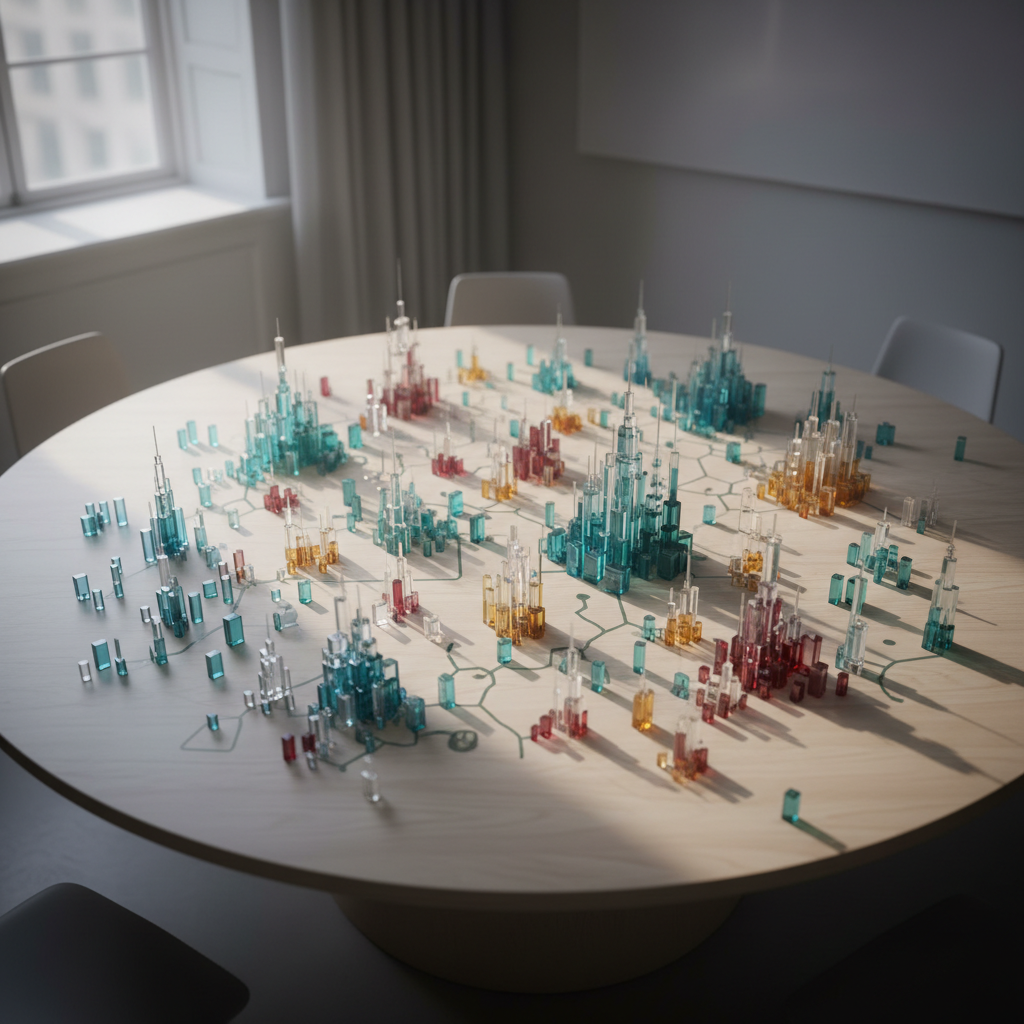
An overhead photographic shot of a large circular conference table made of pale wood, completely empty of chairs or people, with the tabletop covered by a precise arrangement of small translucent geometric blocks in varying heights and colors. The blocks form branching network patterns and rising skyline‑like clusters, hinting at AI startups, markets, and crowds of decision‑makers. Soft morning light streams in from a nearby window, casting long delicate shadows that emphasize the structure and hierarchy of the blocks. The room itself is minimalist with neutral tones, blurred at the edges. Photographic realism, crisp focus on the blocks with subtle vignette, mood is thoughtful, analytical, and quietly optimistic about complex collective behavior driving prosperity.
A highly detailed close‑up of a polished metallic sphere partially wrapped in translucent glass panels, each panel etched with faint circuit‑like patterns and tiny glowing nodes that resemble a global startup ecosystem. The sphere rests on a smooth concrete surface with faint chalk‑like diagrams of curves and network graphs, subtly implying economic growth. Soft diffused studio lighting from above creates gentle reflections and a halo on the upper edge, with a deep, slightly blurred background in cool blues. Photographic realism, centered composition with a shallow depth of field, modern and minimalist mood, suggesting the tension between bold AI ambition and structured, data‑driven reality without any text or human figures.

How We Study Delusion

We choose episodes of bubbles, manias, and AI hype where beliefs clearly moved prices, policy, or careers, then dissect them through narrative economics, reflexivity, coordination theory, and behavioral psychology to map how shared stories turn into real economic outcomes.